KHONA
About This Event
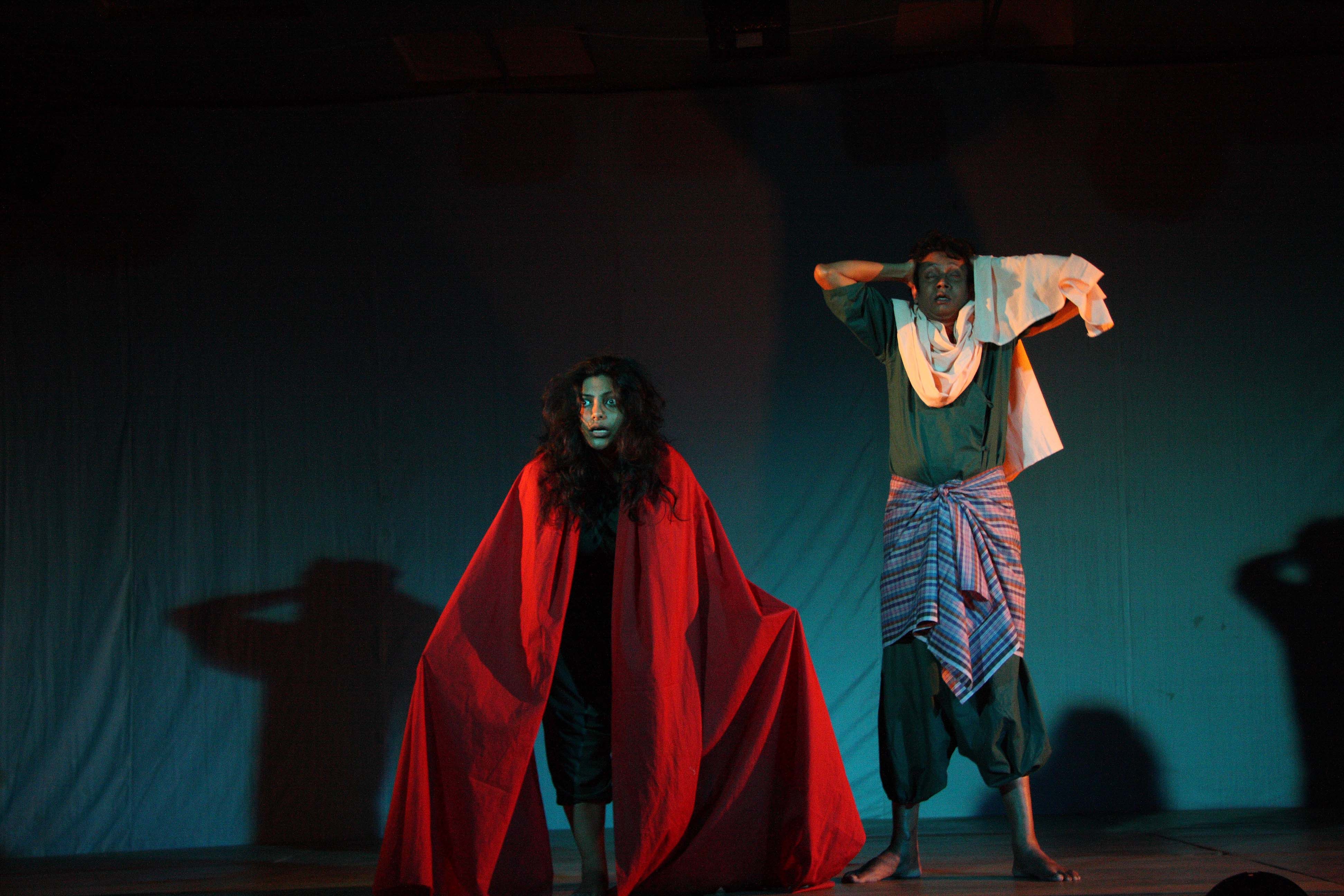
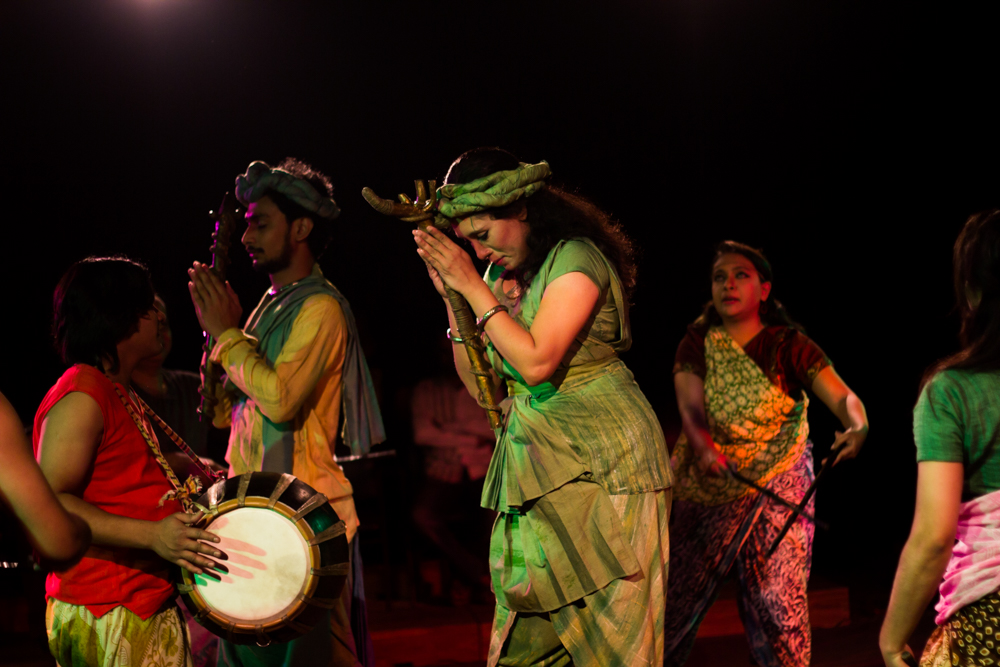
Opening show: 6 March 2010 Writer: Samina Luthfa Director: Mohammad Ali Haider **Storyline:** A woman of profound wisdom, Khona was also known as Leelavati. Her story is ancient, shrouded in the veils of legend. Yet, from what can be gathered, she was a brilliant astrologer, as was her husband, Mihir. Her father-in-law was the renowned astrologer Varaha Mihir. Upon witnessing the growing fame and intellectual prowess of his daughter-in-law, Varaha Mihir was consumed by insecurity and envy. The story of Leelavati’s tongue being severed by her father-in-law's order, and her subsequent transformation into ‘Khona’, has crossed the boundaries of generations. The century-old wisdom preserved in Khona’s Bachan (Khana’s Maxims) carries the scent of water, soil, crops, and the common people. But is this truth truly Leelavati’s alone? Or are these facts a collective compilation of ancient knowledge, woven into the rain, silt, and climate of this land over ages? Was Leelavati’s fate so brutal simply because she was a woman, or was it because she, as a woman, chose to align herself with the common farmers? Or was it patriarchy, the class structure, or both that stood in opposition to her? Driven by a life-defying passion that cared for neither her husband Mihir nor the constraints of society, she was carried beyond the horizon. Khona’s truth survived, passed down verbatim by the farmers through the ages. Yet, questions remain: Is Khona’s truth the ultimate, singular truth? Can what is considered flawless today become a falsehood tomorrow? Was her fatal obsession with standing by the truth merely a stubborn resolve? In the end, Khona herself confronts these very questions. **Playwright’s Note:** Birth-Truth-Death-Life-Destiny-Path. Every path and each opinion—which might lead to either truth or lie—is worthy of devotion if we sing the song of humanity. My journey with Khona began at the very dawn of the twenty-first century. It started with wandering the paths of Barasat, Haroa, Berachampa, and Jibanpur, searching through the ruins of Chandraketugarh and the mounds of Khona-Mihir. After two more years of carrying these thoughts, the creative spark finally ignited. In what language should I compose this legend? In which era did Khona, Mihir, and Varaha live? Were they part of Vikramaditya’s court, or were they the royal astrologers of Dharmaketu, the grandfather of Chandraketu? Legends are plenty, as are the contradictory opinions. In the churning of this deep ocean of history, the doubt of whether what I found was truly 'nectar' never quite left my mind. Despite various limitations, the manuscript for the stage play titled Khona was completed in 2008 and published by 'Yukta' during the Ekushey Book Fair in February 2010. Soon after, Bottala could not ignore the call of the Revolutionary Women's Solidarity. Their demand, combined with the centenary of International Women's Day and the opportunity to perform at the Central Shaheed Minar, led to the new journey of Khona on March 9, 2010. Could there have been a better stage to launch a struggle against dominance, patriarchy, and oppression through the wisdom of Bengal’s soul? The theatrical language of Khona is complex. Bottala has infused that demanding play with the songs of life. Joining my courage with theirs, I too have set out on this path—a journey I once thought was aimless. In acknowledging my debts, Dr. Ali Nawaz’s Khonai Bachan, Krishi O Bangali Sanskriti and Enamul Haque’s Chandraketugarh are not the only sources. I am indebted to many people, many writings, many fallen stars, and the vast waters of the Bay of Bengal that have flowed over the years. I owe an immense debt to my friends at BotTala. I am especially grateful to the director, Mohammad Ali Haider, who envisioned Khona in a form so unique, it transcended my own perspective. Hail to your ever-young spirit! May the rhythm of your theatrical creation triumph." **Director’s Note:** In 2010, the play Khona was published by 'Yukta' during the Ekushey Book Fair. It was the intense passion of my friends at Bottala that eventually led us to bring this script to the stage. For us, this was more than just a play; it felt as if the lives and traditions of the people of Deulnagar, Berachampa, Deganga, and Haroa were manifesting before our very eyes. Khona, also known as Leelavati, appears here as a defiant woman bound by the chains of patriarchy across the past, present, and future. It feels as though the power structures of a male-dominated world never wish to let a woman cross the boundaries—lines drawn specifically by the web of patriarchal control. Within this narrative, the struggle for knowledge and love among the common folk, the indifferent gaze of the ruling class toward women, and the broader struggle of the masses emerge as the ultimate truths of life. The theatrical language of Khona presented itself to us in a unique form. Though unfamiliar at first, it soon blended into our voices, our bodies, and our thoughts with a mesmerizing, lyrical quality. It was the playwright’s distinctive linguistic style that truly inspired us to produce Khona. I extend my thanks to 'Yukta' publications for creating the initial urge to bring this play to the stage. My deepest gratitude goes to my friends at Bottala. Despite being a new troupe, they took on the challenge of such a complex and grand production with immense labor and love in a very short time. Their dedication to this mission has been truly remarkable. **Backstage Performers:** Stage and Lighting Design: Abu Aud Ashrafi Music and Sound Design: Bratto Amin, Sharmin Eity, and Ziaul Abedin Rakhal Costume Design: Tahmina Sultana Mou and Taufiq Hasan Bhuiya Choreography: Mohammad Rafi and Nasir Uddin Nadim Props: Humayra Akhtar Poster Design: Tauhin Hasan