
The Trial of Mallam Ilya
BotTala Production-5 The Trial of Mallam Ilya (1 January 2014)
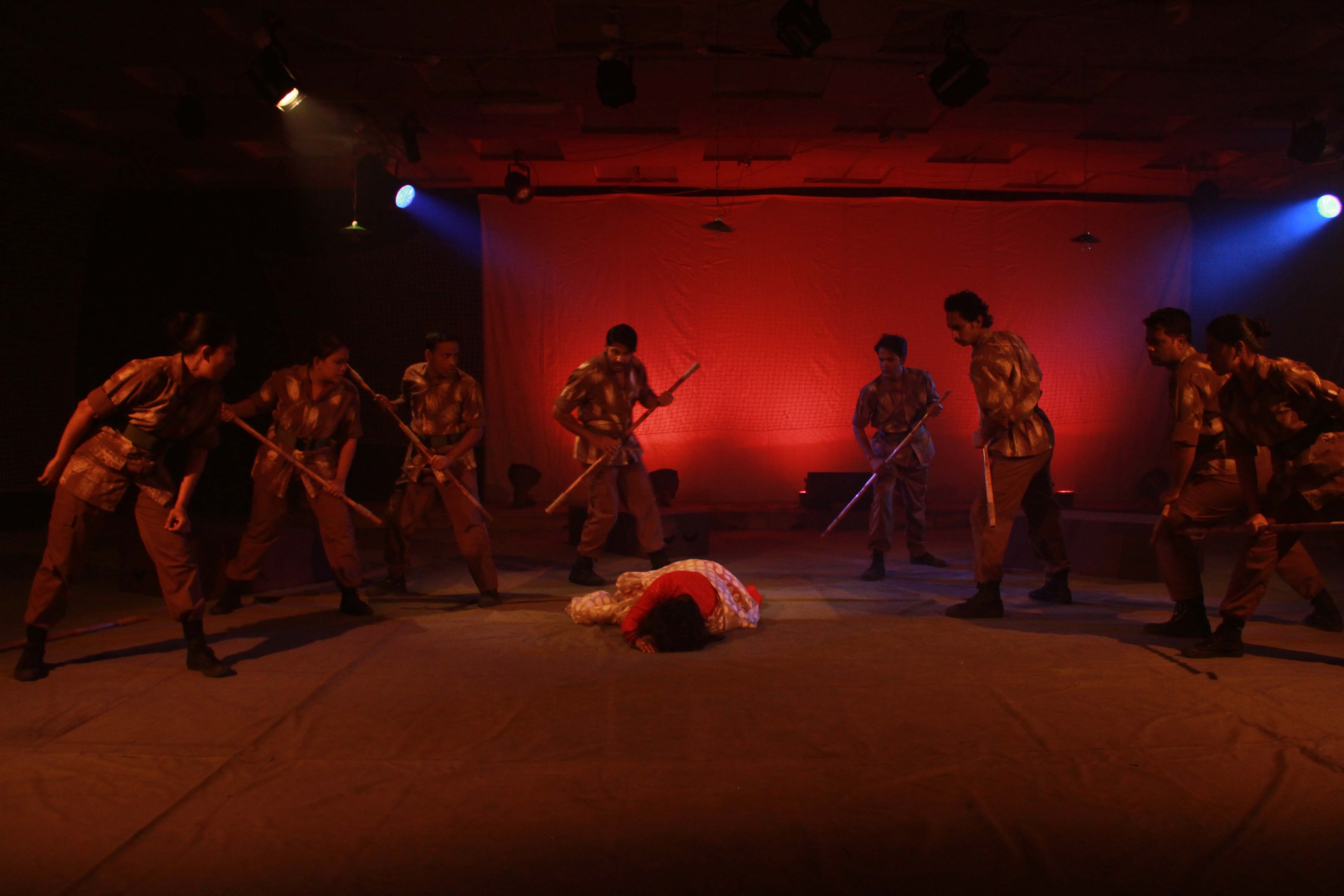
Playwright: Mohammed ben Abdallah Translator: Soumya Sarker Director: Mohammad Ali Haider Storyline: Bottala’s fifth production, The Trial of Mallam Iliya was premiered on 1 January 2014. It is a political drama written in the African non-linear style. The play begins in darkness—amidst a planned revolution. Led by a young man named Malwal, the new revolutionaries raid the house of one of the ruling powers, Mallam Iliya. Although the guidelines for the revolution clearly state that no blood shall be shed, we soon learn that a woman has been murdered—Halima, Iliya’s wife. The revolutionaries abduct Mallam and take him to a secret location, where Malwal and his comrades put him on trial. As Mallam Muhammad Iliya begins his defense, a play within a play begins—multiple layers of narrative unfold. We travel thirty years back to Iliya’s youth. Though his upbringing was mainly religious, his sense of faith and honesty taught him to speak the truth and demand justice. He began to speak out against the tyrannical regime of the time, drawing the scrutiny of the nation’s leader, Kamran. Meanwhile, Halima, the beautiful daughter of Iliya’s mentor Abbas, becomes involved with Kamran and subsequently pregnant. Iliya, along with several other leaders, is accused of plotting Kamran’s assassination and imprisoned. The trial that follows is a farce. When attempts to force a confession fail, a story is fabricated—blaming Iliya for Halima’s pregnancy. He is sentenced to death. The narrative moves back and forth between the past and the present through the testimonies of the dead, reenactments, and Malwal’s interventions. When Kamran temporarily loses power, the orbit of authority shifts—Iliya and his fellow prisoners become the new rulers, while Kamran’s followers are thrown into jail. Yet the game of politics continues; power flips and new rulers rise, but the fate of the people remains unchanged. Iliya, however, always manages to stay close to the seat of power. Eventually, news arrives that Kamran has died in exile. The people’s emotions flare anew as they claim Kamran’s body as their own. Fearing that this claim might spark public outrage, Iliya visits Kamran’s widow, Sania, to negotiate the return of the body. The shrewd Sania agrees—but on one condition: the old confession must be repeated. Iliya and Halima must once again declare that the child in Halima’s womb was fathered by Mallam Iliya himself. At this point in the narration, Malwal becomes intensely agitated. It seems that this “confession” is deeply connected to his own existence. Tonight, a final settlement must be reached—ostensibly for political necessity. But is Malwal instead driven by a desperate search for his own identity? What answer will he find?